
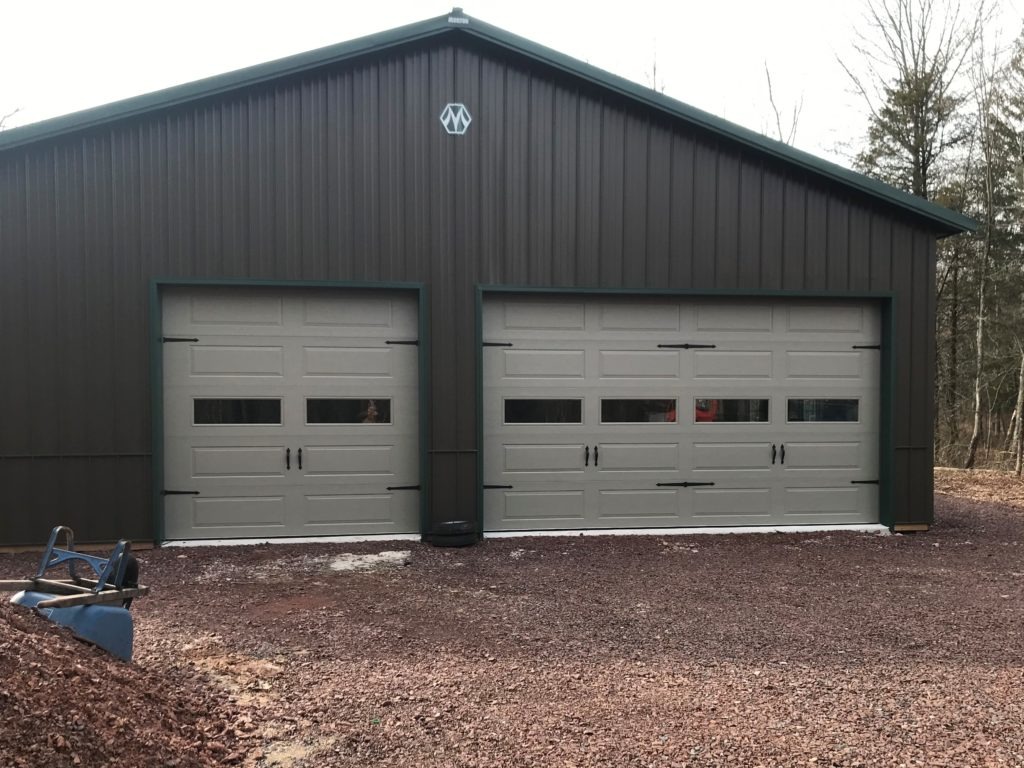
Noticing piles of fallen leaves around your garage door even after sweeping the driveway? Leaves often collect in overlooked spaces around the opening, including the corners, bottom seal, side trim, safety sensors, and nearby drains.
Leaf buildup at garage door corners is usually a routine cleanup issue. However, recurring debris combined with a damaged seal, persistent moisture, or abnormal door movement may need further inspection. A pile of leaves alone does not mean the garage door needs repairing.
Maplewood Garage Door Service serves homeowners in Huntsville, Willis, and nearby Texas communities. This guide explains five common places where leaves collect, how to clear accessible debris safely, and when professional garage door service may be necessary.
Start With Safety, Not the Broom
If the door is crooked, off its tracks, unusually heavy, or has a loose lifting cable, do not use the garage door until a qualified technician has inspected it. Keep people away from the opening. Never loosen or adjust springs, cables, bottom brackets, drums, or other tensioned hardware.
Keep your hands and tools away from moving door parts. The garage door safety guidelines from the Door & Access Systems Manufacturers Association advise keeping the door in sight while operating it and staying clear of the moving door, hinges, tracks, springs, and other components. Do not stand or walk underneath a moving door.
For ordinary loose debris outside an otherwise normal stationary door, use a broom or a vacuum attachment from a safe position. Keep children and pets away, and don’t reach behind the tracks or place a hand under the door. If clearing the visible pile would require reaching into hardware, leave that portion for a professional.
Where to Look First
The Outside Corners
The small space where the driveway, vertical trim, and door meet can catch leaves even after the open driveway has been swept. Look on both sides rather than assuming that a pile on one side represents the whole opening. Compare the area before and after windy or rainy weather to see whether the same corner collects debris again.
Remove loose leaves from the accessible floor and pavement. If the pile comes back quickly, notice the direction it appears to be arriving from and whether a nearby bed, wall, or fence changes the path across the driveway. You don’t need to diagnose airflow to decide where an extra sweep belongs.
The Bottom Seal and Threshold
With the door stationary, look along the visible bottom edge from a safe position. Leaves may rest against the seal or lie on the floor just inside the opening. A leaf near the seal does not mean the rubber needs replacing, and a clean edge does not guarantee the opening is watertight.
Sweep reachable material away from the opening without pulling on the seal. If you notice a torn, loose, or visibly displaced section after the debris is gone, take a photo and ask a garage door professional to evaluate it. Avoid cutting, gluing, or fastening a piece while it is attached to the door.
Along the Side Trim and Behind Stored Items
Walk the accessible area beside each jamb. Leaves can gather against exterior trim, a planter, a bin, or another object near the opening. Inside, check the open floor around stored items without moving anything into the door’s path.
Give the opening enough clear space to observe it from the ground. Don’t remove trim or push tools into narrow gaps to retrieve every fragment. A small amount you cannot safely reach is a reason to ask for help, not to work around tensioned parts.
Near the Safety Sensors
Many automatic garage door systems have safety sensors near the floor on either side of the opening. Leaves or other objects in the beam path can interfere with closing, but a pile is not proof that a sensor is the cause of a particular problem. Sensor placement and indicator lights vary by system.
Clear loose debris from the accessible floor around the sensors without pushing, twisting, or rewiring them. If the problem remains, consult your opener’s instructions or arrange a professional inspection.
Do not bypass the safety system or make electrical repairs yourself. The Door & Access Systems Manufacturers Association’s opener safety guidance explains the purpose of photoelectric safety eyes.
At a Floor Drain or Low Spot
If you have a drain near the opening, look at the visible grate from the ground. Leaves on top of the grate are a practical cleanup target, but water that remains after surface debris is removed deserves a broader investigation. A blocked drain, a low spot, or water entering from elsewhere cannot be diagnosed from a leaf pile alone.
Don’t remove a drain cover, use chemicals, or reach into standing water near electrical equipment. If water is close to an outlet, opener, or wiring, stay clear and contact a qualified electrical professional. A drainage or building professional may be better suited than a garage door technician when the issue extends beyond the door and its seals.
What Wet Leaves Can and Cannot Tell You
A damp pile shows that the leaves got wet. It does not identify whether water came from rain, a washdown, a drainage issue, or another source. Look for a repeatable pattern: which corner is wet, whether the moisture reaches inside, how high any mark extends, and whether the area dries after the weather changes.
Photograph the visible area before cleaning, then check it again after the next comparable weather event. If a stain extends above the opening, tell the person assessing it. Replacing a bottom seal will not necessarily resolve water entering through a wall or another part of the building.
The Environmental Protection Agency’s guide to mold and moisture explains that indoor mold growth depends on moisture and recommends fixing the water problem and drying wet materials promptly. Persistent dampness, visible damage, or extensive mold calls for an appropriate assessment rather than simply covering the area.
A Simple Cleanup Routine
1. Look before touching. Check for a crooked door, loose cable, damaged hardware, water near electricity, or anything else that makes the area unsafe. Stop and seek appropriate help if you see one of these conditions.
2. Keep the door stationary. Work only in areas you can reach from the ground without going under the door or reaching into hardware. Keep the controls away from children while you work.
3. Clear the open floor and pavement. Sweep or vacuum loose leaves away from both corners, the threshold, and the visible sensor area. Do not use the tool to move the sensor, seal, track, or door.
4. Look again. Note any damage, recurring damp patch, or pile that returns to the same place. A photo and a short description are useful if you later request an inspection.
5. Recheck after conditions change. An extra look after a windy day or rain may be more useful than a rigid calendar. Adjust the routine to the amount of debris around your own opening.
This is a cleanup routine, not a repair or a substitute for the maintenance steps in your door and opener manuals. If the door behaves abnormally, don’t keep cycling it to see whether the problem disappears. Describe the symptoms to a professional instead.
When Cleaning Is Enough and When to Get Help
If the leaves are loose, the accessible floor is dry, the seal appears intact, and the door is otherwise operating normally, routine cleanup may be all the situation calls for. There is no reason to buy a new door just because leaves collect beside it.
Ask about garage door maintenance or garage door repair if the seal is visibly damaged, the door has a persistent gap, or a problem continues after the accessible debris is cleared. For a sensor or opener issue, describe what the door does and refer to your model’s instructions rather than assuming one light color has the same meaning on every system. Maplewood also provides garage door opener services.
For staining that reaches beyond the opening, recurring pooling, a drain problem, or wet building materials, a drainage or building professional may need to assess the surrounding area. More than one trade may be involved. Ask each professional to explain what they observed and what their proposed work is intended to fix.
What Should You Budget?
Sweeping accessible leaves with tools you already own may not require a service visit. A service cost, if needed, depends on the actual problem, the parts involved, access, and the scope of work. A damaged seal, a door alignment issue, and a separate drainage problem are different jobs and should not be treated as one standard price.
Before approving work, ask what the inspection found, whether a focused repair is an option, what is included in the estimate, and whether another professional may be needed. No numerical price is given here because the right amount depends on the diagnosis. Avoid authorizing a replacement solely on the basis of a leaf pile.
Frequently Asked Questions
Why Do Leaves Collect at Only One Corner?
The shape and surroundings of an opening can affect where loose leaves settle. A single pile is a useful place to watch, but it does not establish that the door is tilted or that a seal has failed. Clear it safely and note whether it returns.
Can Leaves Stop a Garage Door From Closing?
An obstruction in a safety sensor’s path can interfere with closing on a system equipped with photoelectric sensors. Clear accessible loose debris without moving the sensors, but don’t assume every closing problem is caused by leaves. If abnormal operation continues, seek an inspection.
Should I Replace the Bottom Seal if Leaves Get Inside?
Not automatically. First clear accessible debris and look for visible tears, displacement, or a gap. If you see damage or the problem persists, have the door and seal evaluated before deciding what to replace.
Can I Sweep Leaves Out of the Track?
Sweep only loose material on the open floor that you can reach without entering the hardware area. Do not reach behind tracks or work around cables, springs, rollers, or bottom brackets. Ask a technician to handle debris that cannot be reached safely.
Are Wet Leaves a Sign of a Garage Door Leak?
They show moisture reached the leaves, not how it got there. Note the weather and where the dampness begins and ends. A door seal may be one part of the investigation, but drainage or the surrounding building may also need attention.
How Much Does a Seal Repair Cost?
The price depends on what is damaged, the parts required, access, and the work needed. Ask for a diagnosis and an itemized estimate before authorizing repairs. A numerical range without a verified local basis would not reliably describe your situation.
How Often Should I Check the Corners?
Check when leaves are accumulating and after weather that moves debris toward the opening. The right interval depends on your property and the amount of debris, not a universal schedule. A quick look at both corners can show whether your routine is keeping up.
Get a Clear Next Step
If a recurring pile comes with a damaged seal or a door that isn’t working normally, Maplewood Garage Door Service provides garage door repair and maintenance in Huntsville, Willis, and nearby communities.
Call (936) 777-3314 and describe which corner is affected, what you see, and whether the door is operating normally. For a safety-related door defect, leave the door unused until a qualified technician has inspected it.