What Camden Homeowners Need to Know Before DIY Garage Door Maintenance
A noisy or stiff garage door is a common problem for homeowners. When the door starts squeaking, grinding, or slowing down, many people wonder if they can fix it themselves with a little lubrication. The good news is that some basic lubrication can be safe when done correctly. Still, there are very important parts of your garage door system that should never be touched without professional training.
If you live in Camden or nearby areas and want to keep your door quiet and reliable, here is what you need to know before attempting to lubricate your garage door.
Is It Safe to Lubricate a Garage Door Yourself
In most cases, yes. Light lubrication is safe for homeowners as long as it is done carefully and on the correct parts. The key is knowing the difference between simple maintenance and dangerous adjustments. Many garage door injuries happen when someone tries to repair or tighten parts that require training and specialized tools.
Merchantville Overhead Door receives service calls every year from homeowners who attempted a small DIY fix that caused bigger problems. With the right approach, you can reduce noise and improve performance, but only if you avoid the high tension parts of the system.
Parts You Can Safely Lubricate
These parts are generally safe for homeowners to lubricate when using the correct product.
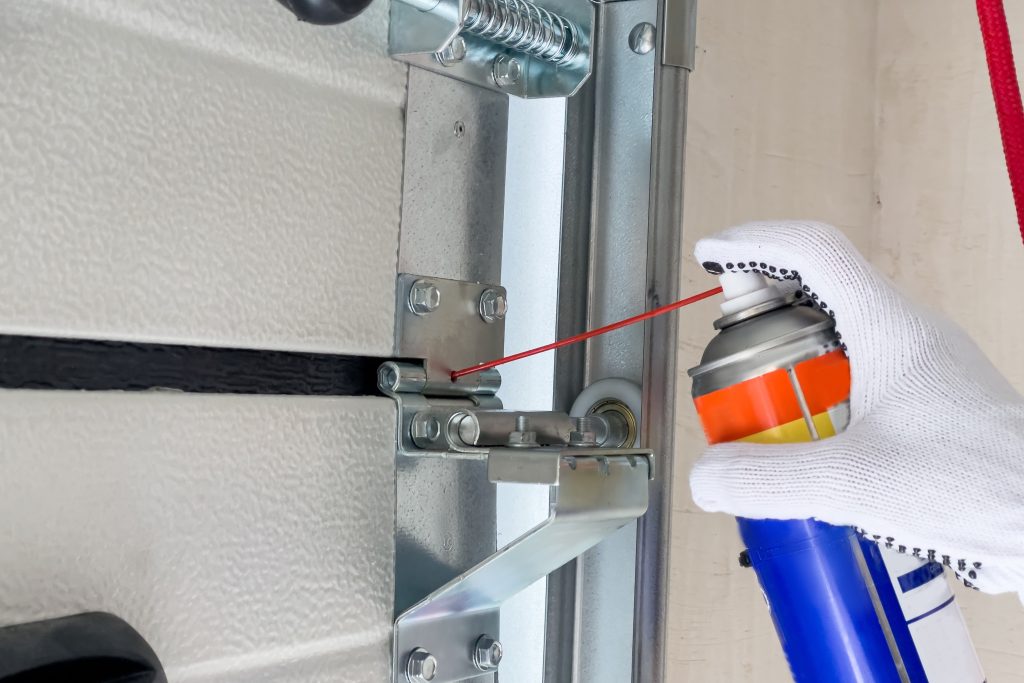
Hinges
A small amount of silicone or lithium lubricant helps hinges move smoothly and reduces squeaking.
Rollers with Metal Bearings
If your rollers have exposed metal bearings, a small amount of lubricant helps them glide more easily. Nylon rollers with sealed bearings should not be lubricated.
Tracks
Tracks should not be greased. Instead, wipe them clean to remove dirt or buildup so the rollers move properly.
Springs on the Surface Only
You can lightly coat the exterior of the springs to protect them from rust. Never adjust, tighten, or remove springs. They hold a large amount of tension.
Weatherstripping and Locks
A light application helps prevent sticking and keeps these components moving smoothly.
These simple steps can reduce noise and help your door operate more efficiently.
Parts You Should Never Try to Adjust or Lubricate
These components are under high tension or require technical alignment. Attempting to service them can cause serious injury or damage.
Torsion Springs
These springs store enough tension to lift the entire door. Only a trained technician should adjust or repair them.
Cables
Cables can snap or unravel without warning. Never attempt to repair or lubricate them.
Bearing Plates and Center Bearings
These support the load of the door. Incorrect lubrication or adjustments can create unsafe conditions.
Garage Door Opener Internal Parts
Motors, gears, and internal electronics should be handled by professionals to avoid voiding warranties or causing electrical issues.
If you are unsure whether a part is safe to lubricate, stop and call a professional.
Signs You Should Stop and Call a Professional
Some garage door problems cannot be fixed with lubrication. If you notice any of the following issues, do not continue with DIY maintenance.
- Grinding or scraping that continues after lubrication
- Jerky or uneven movement
- The door feels heavy when opening
- The opener struggles or strains
- Frayed or loose cables
- The door is crooked or off track
- Visible dents or impact damage
These signs indicate a mechanical issue that requires a trained technician.
Why Professional Garage Door Maintenance Matters
Merchantville Overhead Door has been serving Camden and South Jersey since 1936. Our trained technicians know how to lubricate and adjust garage door systems safely. Professional maintenance ensures that every part of your door is inspected, cleaned, and serviced with precision.
Benefits of professional service include:
- Correct lubrication without overapplying
- Early detection of worn parts
- Better performance and quieter operation
- Longer lifespan for springs, bearings, and hinges
- Greater safety for your family and property
A simple maintenance appointment can prevent future breakdowns and help you avoid costly repairs.
Best Lubricants to Use if You Choose to DIY
If you plan to lubricate your garage door yourself, always choose the right product.
- Use silicone-based spray or lithium-based garage door lubricant.
- Avoid WD-40. It is a cleaner and water displacer, not a proper lubricant.
- Never use thick grease. It attracts dirt and causes buildup.
Use small amounts and wipe away any excess to prevent dripping or residue.
Step-by-Step Guide for Safe, Simple Lubrication
Here is a homeowner-safe process for basic lubrication.
- Turn off the power to the opener.
- Clean dust and debris from the tracks.
- Apply a small amount of lubricant to hinges and metal bearings.
- Lightly coat the exterior of the springs.
- Wipe away any extra lubricant.
- Restore power and open the door several times to distribute the lubricant.
This routine keeps your door moving smoothly without interfering with high tension parts.
Frequently Asked Questions
How often should I lubricate my garage door
Once or twice a year is usually enough for most homes.
Is it dangerous to lubricate torsion springs
Yes. You can apply a light coat on the surface, but never adjust or handle the spring.
Does a new garage door need lubrication
Yes. Even new doors benefit from light maintenance to keep them quiet and efficient.
What lubricant should I use
Silicone spray or white lithium lubricant works best.
Can lubrication fix a noisy door
Sometimes. If the noise continues, there may be a mechanical issue that needs repair.
The Bottom Line
Lubricating a garage door yourself can be safe when you focus only on the simple parts. Hinges, metal rollers, and surface areas are usually safe for light maintenance. Anything involving tension, cables, or alignment should always be handled by a professional.
If you are not sure where the problem is coming from or if the noise continues after lubrication, it is best to schedule a professional inspection.
For safe and reliable garage door maintenance in Camden, call Merchantville Overhead Door at (856) 338-1314 or request a service appointment today.