
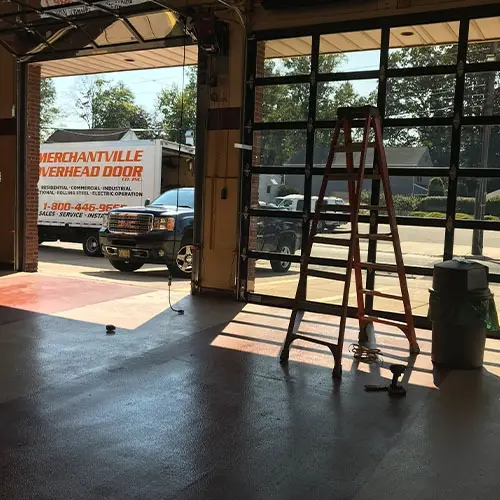
You should call for garage door repair the moment you notice loud or unusual noises, slow response, the door coming off track, broken springs or cables, sagging panels, gaps along the seal, or safety sensor failure. Garage doors give plenty of warning signs before they fail completely, and acting early keeps the repair simple and affordable. Ignoring the signs almost always leads to bigger problems, higher costs, and safety concerns. For homeowners across Southern New Jersey and the Greater Philadelphia area, knowing when to pick up the phone makes a real difference in how long your garage door lasts and how reliably it performs.
Why Timing Matters With Garage Door Repair
Garage doors are the largest moving part of most homes, and they handle thousands of cycles every year. That kind of workload means wear and tear is inevitable. The question isn’t whether your garage door will need attention, it’s when.
Catching problems early keeps repairs manageable. A worn roller replaced today costs a fraction of what you’d pay if it leads to a track failure tomorrow. A small spring issue caught in time avoids the full breakdown that comes when the spring snaps and the door becomes inoperable.
There’s also a safety side to this. A malfunctioning garage door can injure people, damage vehicles, or leave your home vulnerable to break-ins. Timely garage door repair protects your family, your property, and your peace of mind.
Loud or Unusual Noises During Operation
A healthy garage door runs quietly. When you start hearing grinding, popping, squeaking, scraping, or banging sounds, the door is telling you something needs attention.
Grinding usually points to worn rollers or a chain drive that needs lubrication. Popping often means hinges or rollers are loose and shifting. Squeaking signals dry hardware, while scraping suggests a panel or roller is rubbing against the track. Banging is more serious and often indicates a broken spring or a loose section pulling on the system.
Don’t get used to the noise. What starts as a minor sound can quickly escalate into a major failure. Calling a technician at the first sign of unusual noise often turns a quick fix into a long-term solution.
Slow Response or Hesitation When Opening or Closing
When you press the remote or wall control and the door takes longer than usual to respond, something is off. A garage door should react within a second or two and move smoothly from start to finish.
Several issues can cause slow response. The opener may be wearing down. The safety sensors might be slightly misaligned, causing the system to second guess itself. Springs may have weakened, forcing the opener to work harder. Even something as simple as a weak remote battery can affect timing.
Slow response often points to more than one small issue building up. Rather than guessing, having a technician check the system catches the underlying cause before it turns into a full failure.
Garage Door Is Off Track or Hanging Crooked
A door that comes off its track is one of the most obvious signs you need garage door repair. You’ll see uneven gaps, the door tilting to one side, or a panel rubbing against the frame. The door may struggle to move or stop entirely.
This usually happens because of an impact, a broken cable, or worn rollers that finally give out. Sometimes a loose track mount lets the rail shift, throwing off the entire alignment.
Never try to force a door that’s off track. Operating it in that condition can damage panels, rollers, and the opener motor in a matter of seconds. Stop using the door and call a professional right away.
Broken Springs or Cables
Garage door springs and cables do the heavy lifting. Torsion springs above the door and extension springs along the tracks handle most of the weight, while cables transfer that force to the door itself.
When a spring snaps, you’ll usually hear a loud bang, similar to a firecracker. The door may suddenly feel impossibly heavy or refuse to open at all. You might see a visible gap in the spring coil or a cable hanging loose.
These components store enormous tension, and a DIY repair attempt can lead to serious injury. Spring and cable replacement is one of the clearest situations where professional garage door repair is the only safe answer.
Sagging or Damaged Panels
Panels take a beating over the years. Vehicles back into them, weather wears them down, and age affects their structure. A sagging or warped panel changes how the door balances, which puts extra strain on rollers, springs, and the opener.
Dents and surface damage are mostly cosmetic, but cracks, severe warping, and rust can compromise the door’s integrity. A bent panel may still operate for a while, but it will accelerate wear on every other component.
In many cases, individual panels can be replaced without swapping out the entire door. Whether that’s the right move depends on the door’s age, the extent of the damage, and whether a matching replacement panel is available.
Gaps Along the Bottom or Sides of the Door
Weather seals and weatherstripping keep your garage protected from drafts, rain, snow, pests, and energy loss. Over time these rubber and vinyl components crack, harden, or pull away from the door.
You’ll start noticing the effects pretty quickly. Cold air seeps in during winter. Water pools near the door after heavy rain. Leaves, dust, and even small animals find their way in. Energy bills creep up as heated or cooled air escapes through the gaps.
Replacing weather seals is one of the simpler garage door repairs, but it’s also one of the most overlooked. A quick fix here saves money on energy costs and keeps your garage cleaner and more comfortable.
Safety Sensor or Auto-Reverse Failure
Safety sensors are required on modern garage doors to prevent injury. The small sensors mounted near the floor on either side of the door create a beam that stops or reverses the door if something crosses its path.
When these sensors fail, the consequences can be serious. The door might reverse on its own for no reason, refuse to close entirely, or worse, close without stopping for obstructions. Any of these scenarios is a safety risk, especially with children or pets in the home.
Sometimes the fix is simple, like cleaning the lenses or realigning the brackets. Other times the sensors, wiring, or control board need replacement. Either way, this is a job for a trained technician who can confirm the safety system works correctly before signing off.
Garage Door Won’t Open or Close at All
A door that won’t move is the clearest sign professional help is needed. The cause could be a tripped breaker, a broken spring, a failed opener motor, a locked manual release, or a remote programming issue.
Trying to force the door open manually with a broken spring can result in serious injury, since the door becomes extremely heavy without the spring counterbalancing the weight. Repeatedly hitting the remote when the motor is failing can burn it out completely.
When the door stops working, leave it alone and call a professional. A technician can diagnose the issue quickly and have the right parts on hand to get you back up and running.
The Risks of Delaying Garage Door Repair
Putting off a garage door repair almost never works out in your favor. What starts as a small issue compounds into bigger problems. A worn roller stresses the track. A weakened spring stresses the opener. A bad sensor disables the safety system entirely.
There’s a financial side too. Emergency repairs cost more than scheduled ones. A door that fails completely can leave your home exposed overnight, creating security concerns and possibly leading to property damage or theft.
Beyond cost and security, there’s the safety factor. A garage door that fails unexpectedly can injure someone, damage a vehicle, or fall on whatever happens to be underneath. Acting on the warning signs early avoids every one of these outcomes.
What to Expect When You Call a Professional
When you call a professional for garage door repair, the process is usually straightforward. The technician arrives, listens to your description of the problem, and inspects the door, opener, springs, cables, and hardware.
After the inspection, you’ll get a clear explanation of what’s wrong and a transparent estimate before any work begins. Most repairs are completed during the same visit, since experienced technicians keep common replacement parts on their trucks.
Once the repair is done, the technician will test the door through several full cycles to make sure everything operates smoothly and safely. A good service team also points out any developing issues so you can plan ahead instead of being caught off guard.
Trust Merchantville Overhead Door for Reliable Garage Door Repair
When your garage door shows signs of trouble, you want a team that responds quickly and gets the repair right the first time. Merchantville Overhead Door has served Southern New Jersey and the Greater Philadelphia area since 1936, with four generations of family ownership behind every service call. From worn springs to sensor issues to full door replacements, we bring decades of expertise to every job. Same day and emergency services are available when you need them most.