
A service call at a Burlington County distribution center starts as a complaint about uneven flooring near the receiving bay. Forklifts have been slowing at the dock leveler transition for weeks without anyone connecting the symptom to equipment. Our technician runs the leveler through its full cycle and measures the lip position under load. A hydraulic cylinder with a slow internal leak is causing the lip to drop two inches during trailer unloading. The forklift operators adapted and the facility manager assumed a settling issue with the concrete. A hydraulic repair resolved what the facility had absorbed as a daily inconvenience. When dock components fail gradually, the symptoms often look like something else entirely.
Loading dock equipment is one of the most operationally critical systems in any commercial facility and one of the least understood. This guide breaks down what every major component does, why it matters, and what happens when any part of the system is neglected or mismatched to actual facility demands.
What Loading Dock Equipment Actually Is
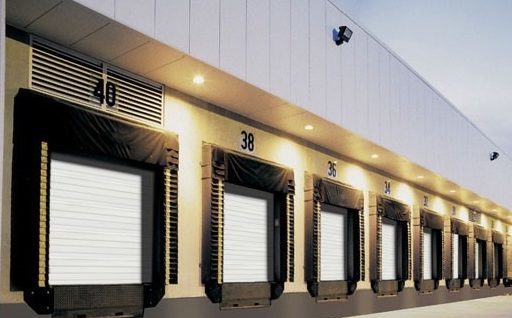
Loading dock equipment is not a single product. It is an interconnected system designed to create a safe, efficient, and compliant bridge between a facility’s floor and the cargo bed of a delivery vehicle. The system typically includes dock levelers, vehicle restraints, dock seals and shelters, dock bumpers, and dock lights.
Each component has a specific function and failure mode, and the absence of any one creates risk that extends to the others. A vehicle restraint that fails to engage puts stress on the dock leveler during load transfer. A dock seal that no longer seals allows environmental intrusion affecting cargo and energy costs. The components do not operate independently.
Dock Levelers and What They Do
The dock leveler bridges the facility floor and the trailer bed and has the most direct impact on forklift safety and load transfer efficiency. Trailer bed heights vary by as much as twelve inches depending on suspension condition, load weight, and tire pressure at the time of docking. A dock leveler accommodates that variance and creates a stable crossing surface for forklifts and pallet jacks.
There are two primary types. Mechanical dock levelers use a stored-energy spring system and a hold-down device to maintain lip contact with the trailer bed during loading and unloading. Hydraulic dock levelers use a pump unit and cylinder to control platform movement and lip extension, offering smoother operation and less physical effort from dock workers across a full shift.
Both types are rated by capacity, and matching that rating to actual forklift and load weight is a specification decision with real consequences. OSHA 1910.26 governs dockboards and bridging devices in general industry, requiring they support the loads placed on them and be secured against unintended movement. Operating a leveler beyond its rated capacity or with a degraded cylinder creates a safety hazard and a compliance exposure.
Vehicle Restraints and Why They Are Non-Negotiable
A vehicle restraint engages the rear impact guard of a trailer and prevents trailer creep during loading and unloading. Trailer creep is the gradual forward movement of a vehicle caused by load weight transferring from the trailer to the dock platform during forklift operations. Without an active restraint, a trailer can separate from the dock while a forklift is extended across the leveler, creating a fall hazard recognized as one of the leading causes of serious dock-area incidents.
The restraint works in conjunction with the dock leveler, not as a separate safety measure. When engaged, it confirms in modern installations that the trailer is secured before the leveler lip extends. When bypassed or failed, the loading sequence proceeds without its foundational safety condition.
In our experience across Southern New Jersey commercial facilities, vehicle restraint maintenance is one of the most frequently deferred items on a dock service schedule. The restraint mechanism cycles with every trailer docking and wear on the hook and engagement surface accumulates over thousands of cycles. Regular inspection and lubrication is not optional. It is the step that keeps the rest of the dock system from operating under an unsafe condition.
Dock Seals and Shelters
A dock seal compresses against the sides and top of a trailer to create a weathertight connection at the dock opening. A dock shelter uses adjustable foam pads or curtain panels to accommodate more trailer sizes while blocking wind, rain, and pests.
Near the Delaware River corridor, year-round humidity and salt air accelerate wear on exposed dock seal foam and fabric faster than in drier inland environments. A seal compressed past its serviceable range no longer makes full contact with the trailer, leaving gaps that allow environmental intrusion during every loading event affecting energy consumption and cargo quality in temperature-controlled facilities.
A torn header pad or side seal often gets flagged as low-priority. In our experience, those surface failures develop into full contact losses within one or two seasons when unaddressed. Replacing a dock seal at the first sign of foam compression or fabric separation costs a fraction of the energy losses and cargo quality issues a failed seal produces over a full operating year.
Dock Bumpers
Dock bumpers attach to the dock face and absorb the impact of a backing trailer. Fabricated from laminated or molded rubber, they protect the dock face, door frame, and door itself from repeated trailer impact. In high-volume facilities, bumper wear gets overlooked until the damage it was preventing is visible.
When bumpers wear through their serviceable thickness they transmit impact force directly to the concrete dock face and steel door header. That force cracks the concrete dock edge, shifts the door frame out of alignment, and sometimes affects the door track mounting. Our team sees this pattern consistently in facilities that have deferred bumper maintenance for several seasons.
Dock Lights
A dock light illuminates the inside of a trailer during loading and unloading, allowing workers to identify floor hazards and position loads accurately. In facilities operating across multiple shifts or handling unstable loads, adequate trailer illumination is an operational safety requirement.
The arm pivot mechanism wears over time, and a dock light that no longer holds position or has a failed ballast carries a direct safety implication. OSHA General Industry standards require adequate illumination in walking and working areas, and a dock without a functioning light fails that requirement during night shift operations.
High-Performance Doors and Their Role at the Loading Dock
The overhead door at a loading dock functions as part of the same operational environment as the dock equipment below it. Standard sectional doors are not engineered for active dock cycle demands. A door opening and closing thirty to fifty times per shift accumulates cycles that would exhaust a standard commercial door within months.
High-performance doors are engineered for high-cycle, high-speed operation at commercial loading docks. They open and close faster than standard sectional doors, reducing exposure time during each trailer docking event. In facilities where temperature control or dust containment matters, the dock door’s speed and seal quality is as critical as the leveler or vehicle restraint beneath it.
Across four generations of commercial service in Southern New Jersey, dock doors and dock equipment fail in sequence when one is deferred. A dock door running on worn tracks transmits vibration to the dock frame that accelerates wear on the bumper mounting and door header. Keeping both systems on the same maintenance schedule prevents that compounding failure cycle.
How Loading Dock Equipment Failures Affect Operations
A leveler that drops under load shuts down that dock position. A vehicle restraint that fails to engage stops operations before the first trailer moves. A dock seal that has lost contact allows rain and pests into the facility during every receiving event. The operational cost extends beyond the repair invoice, and a single equipment failure during a peak window disrupts the entire logistics flow for that dock and often adjacent ones.
Across decades of commercial service in Camden, Burlington, Gloucester, and Philadelphia counties, facilities that maintain their dock equipment consistently experience failures as isolated events rather than cascading shutdowns. The difference is not equipment quality. It is maintenance frequency.
When to Schedule a Professional Loading Dock Inspection
Annual professional inspections are the baseline for most commercial facilities. High-volume docks benefit from semi-annual inspections. A thorough inspection covers leveler capacity calibration and cylinder condition, vehicle restraint engagement and cycle testing, seal and shelter contact quality, bumper thickness and mounting integrity, dock light function, and overhead door cycle performance.
OSHA 1910.26 compliance assessment is part of a thorough dock inspection, not a separate checklist item. Facilities treating compliance as a standalone audit consistently find gaps in the components they assumed were covered.
Trust Merchantville Overhead Door for Loading Dock Equipment Service
Merchantville Overhead Door Company has been serving commercial and industrial facilities across Southern New Jersey and the Greater Philadelphia area since 1936. For four generations our IDEA-certified technicians have worked on commercial sectional overhead doors, high-performance rolling doors, and the full range of loading dock equipment that keeps facilities operating safely.
Recognized as a 2026 IDA Top 50 Dealer and IDA Top 100 Dealer, Merchantville brings independently verified commercial expertise to every dock equipment service call. Facility managers who want to get ahead of their next equipment failure are encouraged to reach out to Merchantville Overhead Door for a professional inspection before a maintenance item becomes a disruption.