
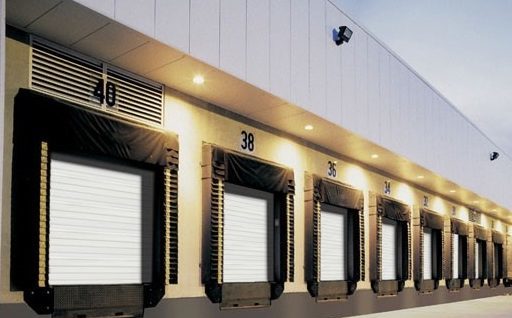
Loading dock leveler problems can turn a five-minute unload into a backed-up dock schedule in seconds. A forklift reaches the trailer, the leveler lip will not land correctly, and the immediate question is not simply, “What part failed?” It is whether the bay can remain in service, what must be inspected, and whether another repair still makes financial sense.
For facility managers in South Jersey and Philadelphia, that decision affects labor, detention time, throughput, product flow, and safety. Merchantville Overhead Door Company provides loading dock equipment service and installation for commercial facilities across Camden, Burlington, Gloucester, and Philadelphia counties.
This guide turns common symptoms into decisions. It does not replace manufacturer instructions, a facility safety program, or qualified on-site evaluation.
First Response: Decide Whether the Bay Must Stop
A leveler is the working bridge between the dock and the transport vehicle. OSHA’s walking-working surface definitions include dock levelers within the term “dockboards.” That matters because a problem that changes support, position, capacity, or vehicle control is more than an inconvenience.
Stop using the bay and isolate it from traffic if any of these conditions appear:
- The deck, lip, hinge, rear frame, welds, or supporting structure is visibly cracked, bent, separated, or displaced.
- The leveler drops, drifts, bounces, binds, or moves in a way that no longer provides a stable path.
- The lip cannot rest securely on the trailer bed, has marginal contact, or slips as traffic crosses.
- The unit will not return to a safe stored position, leaving a trip, pinch, or exposed-edge hazard.
- Hydraulic fluid is leaking onto the pit, floor, components, or travel path.
- A mechanical hold-down, spring, linkage, chain, restraint, interlock, control, or safety device is damaged or behaving unpredictably.
- Rated-capacity information is missing or unreadable, or the planned load may exceed the unit’s rating.
- A trailer is moving, creeping, separating from the dock, or is not controlled under the facility’s docking procedure.
Do not send “one last load” across a suspect leveler. Block access, identify the bay as out of service, reroute traffic, and preserve the conditions a technician needs to evaluate.
OSHA requires dockboards to support the maximum intended load, with that load including the employees, equipment, vehicles, tools, materials, and other forces reasonably expected at one time. The standard also addresses run-off protection, secure positioning of portable dockboards, transport-vehicle movement, and safe handling of portable units.
These rules do not create a universal OSHA maintenance interval for every dock leveler. Inspection and service frequency should instead reflect the manufacturer’s instructions, unit type, age, cycle volume, environment, prior findings, and your employer safety program.
Match the Symptom to the Next Decision
A symptom can narrow the inspection, but it is not a diagnosis. Pit access and stored energy belong in trained hands.
The Deck Will Not Raise
Start with conditions that can be checked without entering the pit: Is power available? Is an emergency stop engaged?
Does the control station show damage, water intrusion, or an abnormal indicator? Is debris visibly obstructing motion?
If the unit is hydraulic, a technician may need to evaluate the power supply, controls, motor, pump, hoses, fittings, fluid condition, cylinder, and structural binding. On a mechanical unit, the inspection may shift toward the hold-down, springs, chains, linkages, and worn pivot points.
Decision: Stop if the deck will not respond normally or if repeated control inputs produce inconsistent motion. A failed lift during an active schedule is a service call, not a cue to pry, pull, bypass, or enter the pit.
The Deck Raises but the Lip Will Not Extend
Watch the sequence from a protected location. A lip that hesitates, hangs, slams, or only extends intermittently may point to obstruction, worn hinge components, a sequencing problem, damaged linkage, or a hydraulic or control issue.
Inspect the visible lip plate and hinge line for deformation, packed debris, uneven gaps, missing hardware, and fresh impact marks. Also note whether the problem occurs every cycle or only with particular trailer heights.
Decision: Do not bridge the gap if the lip cannot deploy fully and make secure contact. Record the trailer type and bed height involved, because an application mismatch can resemble a component failure.
The Lip Lands With Too Little Contact
Limited lip purchase may result from trailer position, unusually high or low bed height, incorrect approach, damaged bumpers, an altered dock face, or a leveler whose working range no longer suits the fleet. Continuing to cross can worsen movement and edge loading.
OSHA requires measures that prevent the transport vehicle from moving while employees are on the dockboard. For powered industrial truck operations, 29 CFR 1910.178 also addresses setting highway-truck brakes and using rear-wheel chocks to prevent rolling, plus possible fixed-jack support for an uncoupled semitrailer to prevent upending.
Decision: Stop the crossing, verify the vehicle is positioned and controlled under site procedure, then have the leveler geometry, bumpers, lip, hinges, and application reviewed. If the problem follows certain trailers, collect those trailer dimensions before selecting a replacement.
The Leveler Drops or Drifts Under Load
Any unexpected deck movement under traffic is a hard stop. A hydraulic leak, internal cylinder bypass, valve problem, structural issue, or changing trailer position can all contribute, but the symptom itself is enough to remove the bay from service.
Document whether the deck drifts while unloaded, while resting on a trailer, or only when traffic crosses. Note any oil, unusual sound, temperature change, or trailer movement without entering the pit.
Decision: Isolate the bay until a qualified technician confirms stable operation and the cause is corrected. Cleaning the visible spill is not the same as resolving the fault.
The Leveler Makes New Banging, Grinding, or Squealing Sounds
New sound is often the earliest warning that contact, alignment, lubrication, or wear has changed. It can come from the lip hinge, rear hinge, rollers, linkages, hold-down mechanism, pump, motor, or metal-to-metal interference.
Decision: If noise comes with jerky motion, structural movement, poor lip contact, fluid leakage, or failed return, stop immediately. If operation remains stable, schedule prompt inspection before the sound becomes a breakdown, and do not assume that adding lubricant is the correct repair.
The Deck Will Not Return Flush to the Dock
A deck that parks high or low creates a trip and impact exposure and may interfere with doors, cleaning, or material flow. Debris, binding hinges, damaged supports, incorrect adjustment, control faults, or a lip that does not retract can prevent proper storage.
Decision: Barricade the opening if the surface cannot be made flush through normal operation. Do not stand on the deck, jump on it, or use a forklift to force it down.
The Leveler Works, but Only After Several Attempts
Intermittent operation is not dependable operation. Repeated button presses or cycle attempts can hide a deteriorating switch, connection, control, hydraulic, or mechanical sequencing problem until the bay fails with a trailer waiting.
Decision: Log the exact sequence and schedule service while a controlled shutdown is still possible. Planned downtime is usually less disruptive than an emergency failure during a peak receiving window.
Use a Consistent Inspection Record
A useful inspection record does more than say “leveler not working.” It gives maintenance staff and service providers enough detail to reproduce the problem, identify risk, and compare one event with earlier repairs.
Record these points before service, but only from a safe observation area:
- Asset identity: Bay number, manufacturer, model, serial number, type, capacity label, installation date if known, and available manuals.
- Operating symptom: What the unit did, when in the cycle it happened, whether the fault was constant or intermittent, and what sound or motion accompanied it.
- Visible condition: Deck and lip alignment, hinge gaps, welds, rust-through, impact damage, pit debris, fluid, hoses visible without entry, bumpers, controls, labels, guards, and stored position.
- Application conditions: Trailer type, bed height, load weight, forklift and attachment weight, crossing speed, traffic pattern, and whether loads are concentrated or unusually heavy.
- Vehicle interface: Trailer position, restraint or chocking status under site procedure, bumper compression, landing-gear condition, and any observed trailer creep.
- Failure history: Prior repair dates, replaced components, repeat symptoms, downtime hours, and whether parts are still supported.
- Operational impact: Loads delayed, labor reassigned, trucks held, alternate bays used, and downstream production or shipping affected.
Photographs and short videos can help if they are captured without approaching moving equipment or entering a hazardous area. Preserve damaged parts and technician findings with the work order so the next budget decision is based on history, not memory.
Repair or Replace: Use More Than the Invoice Total
Repair is usually the reasonable choice when the structure remains sound, the fault is isolated, suitable parts are available, capacity still fits the operation, and recent service history does not show a repeating pattern. A control component, hose, seal, adjustment, or worn hinge part may be economical if the rest of the system has useful life.
Replacement deserves serious consideration when the deck, lip, frame, hinges, or pit interface has major structural damage or corrosion. It also becomes more attractive when parts are obsolete, capacity is no longer adequate, the unit cannot accommodate the current trailer range, failures repeat, or one repair exposes several other end-of-life components.
Ask for a written assessment that separates three categories:
- Required now: Work needed before the bay can safely return to service.
- Near-term risk: Worn or deteriorated items likely to cause another shutdown.
- Improvement opportunity: Changes that may improve fit, control, weather sealing, communication, or traffic flow but are not required to correct today’s fault.
That separation helps prevent two mistakes: buying a replacement when a contained repair solves the real problem, or approving a cheap repair that leaves a high-probability second failure untouched.
Calculate the Operational Cost of Each Option
The lowest repair quote can be the most expensive decision if the bay fails again in the next peak cycle. Compare repair and replacement over the period your capital plan actually covers.
| Cost Factor | Questions to Price |
|---|---|
| Downtime | How many hours will the bay be unavailable for diagnosis, parts, repair, installation, and inspection? |
| Labor | Will dock staff, forklift operators, maintenance personnel, or supervisors wait or work overtime? |
| Freight | Could carriers charge detention, redelivery, layover, or rescheduling costs? |
| Throughput | How many pallets, trailers, or production inputs will shift to other bays? |
| Risk Control | Will temporary routing create congestion, longer travel paths, or new pedestrian conflicts? |
| Repeat Failure | What has been spent on this asset over the last 12 to 36 months, including labor and downtime? |
| Parts Support | Are critical components readily available, or will lead times keep the bay vulnerable? |
| Application Fit | Does the current unit still match trailer heights, load patterns, forklift weights, and cycle demand? |
| Adjacent Equipment | Do bumpers, seals, shelters, restraints, lights, controls, or the overhead door need coordinated work? |
Use a simple comparison: immediate project cost plus expected downtime cost plus likely near-term repair exposure. Then factor in the operational benefit of a better-fitting system, without assuming that every newer feature produces a return for every facility.
Coordinate the Whole Dock Position
A leveler does not operate in isolation. Worn bumpers can change trailer spacing, damaged seals can admit weather, a restraint or communication light can affect procedure, and an overhead door problem can block the bay even after the leveler is repaired.
A dock-position review should consider the leveler, pit, dock face, bumpers, seals or shelters, vehicle restraint, lights, controls, trailer approach, and commercial overhead door as one operating system. Coordinating repairs can reduce repeated shutdowns and reveal whether damage is coming from impact, drainage, corrosion, vehicle mismatch, or process.
Do not assume an interlock or vehicle restraint changes every regulatory requirement. Equipment selection and procedures must be evaluated for the actual operation, and employees must follow the facility’s approved program.
Build a Response Plan Before the Next Failure
Assign each dock position an asset number and keep manuals, capacities, service history, and photos together. Define who can shut down a bay, where barricades are stored, how traffic will be redirected, and who contacts the service provider.
Set inspection frequency from manufacturer instructions, usage, environment, history, and a documented risk assessment. High-cycle, wet, corrosive, refrigerated, or impact-prone positions may justify more frequent attention than lightly used bays, but avoid labeling one blanket interval as an OSHA mandate.
When a fault appears, the first goal is controlled decision-making: protect people, stabilize traffic, document the symptom, and choose a repair that addresses the cause. Merchantville Overhead Door Company is available 24/7 at (856) 338-1314 for loading dock and commercial door needs from its Camden location at 220 Kaighns Ave, Camden, NJ 08103.
For scheduling, request service online or call Merchantville Overhead Door Company at (856) 338-1314.
Frequently Asked Questions
Can We Use a Loading Dock Leveler That Still Moves but Drifts?
No. Stop using the bay. Unexpected movement means the crossing is not reliably stable, so isolate the position and have the cause evaluated before returning it to service.
Does OSHA Require Dock Leveler Maintenance Every Year?
29 CFR 1910.26 does not state a blanket annual maintenance interval for every dock leveler. It requires covered dockboards to meet specific conditions involving capacity, run-off protection, positioning, vehicle movement, and handling, while the appropriate inspection schedule depends on the equipment, instructions, operation, and employer program.
What Information Should We Give the Service Company?
Provide the bay number, manufacturer, model, serial number, capacity, leveler type, symptom, timing, photos taken safely, recent repair history, and the trailer and load conditions involved. Also explain whether the bay is completely down or available for controlled inspection.
Is a Hydraulic Leak Enough Reason to Close the Bay?
Yes. Fluid can create a walking-working surface hazard, while the leak may also affect controlled support or movement. Isolate the unit and arrange qualified service rather than topping off fluid and continuing operations.
When Is Replacement Better Than Another Repair?
Replacement is more likely to make business sense when structural deterioration is significant, failures are recurring, parts are obsolete, capacity or operating range no longer fits, or downtime exposure exceeds the value of extending the unit’s life. A written condition assessment and total-cost comparison should support the decision.
Should the Leveler Be Evaluated Separately From the Rest of the Dock?
Usually not. Bumpers, trailer position, restraints, seals, lights, controls, the pit, and the overhead door can affect how the dock position performs, so a system-level review often produces a better repair scope.